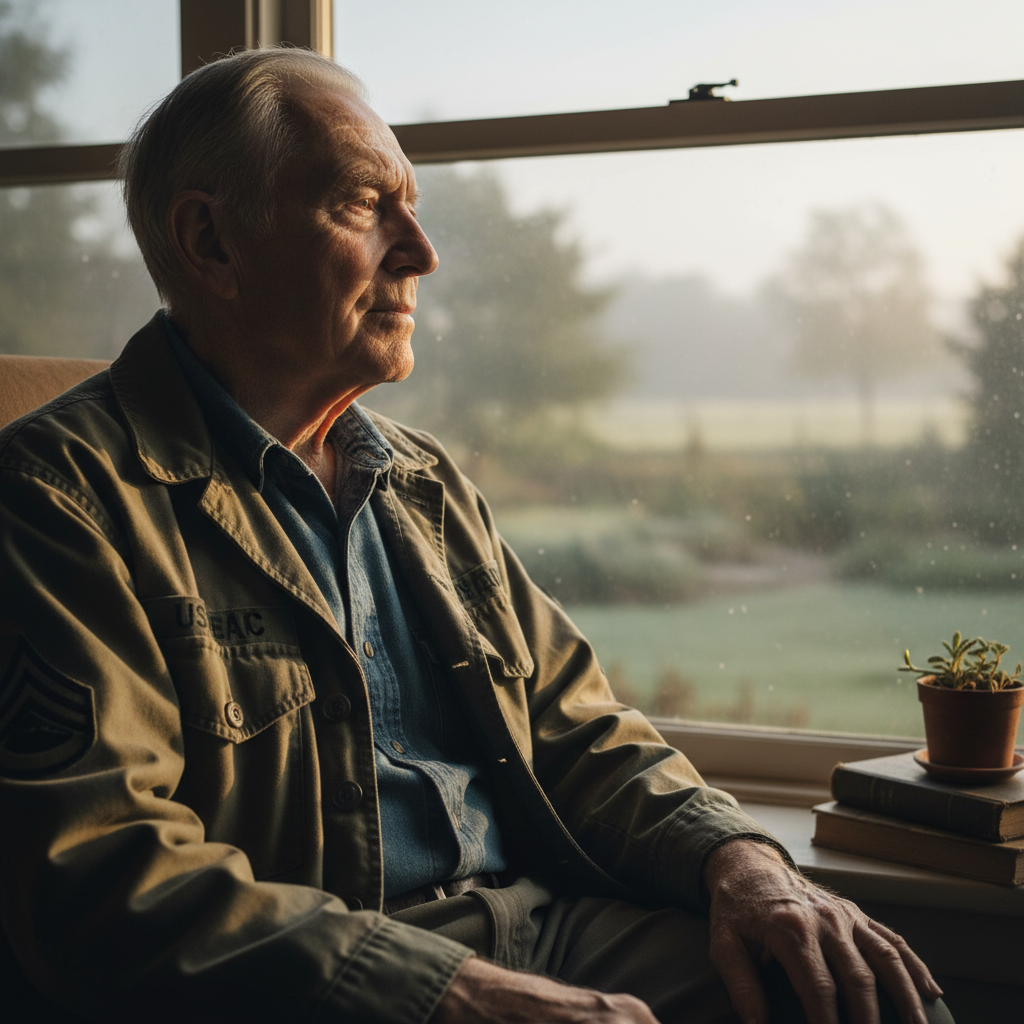
What brings you here today?
There's no wrong answer. Take your time.
Does this replace therapy?
Anchor isn't a therapist, and it doesn't pretend to be. It's the 3 a.m. toolkit โ the thing you reach for when the office is closed, the waitlist is long, and the feeling is right now.
For those in therapy, Anchor works alongside your provider. Many clinicians assign Anchor exercises between sessions to reinforce CPT and EMDR work. For those not yet in therapy, it offers evidence-based skills while you find your footing.
The goal is never to replace human connection. It's to make sure you have something solid to hold onto until you find it.
"Digital mental health tools used as adjuncts to therapy demonstrate superior outcomes to either intervention alone, particularly for PTSD symptom reduction between sessions."
โ American Psychological Association, Clinical Practice Guideline for PTSD (2023)
What's the thought that keeps returning?
Anchor gently asks:
What evidence challenges this belief?
Will it work if I can't talk about what happened?
Yes. Anchor was built for exactly this. You don't need to name it, describe it, or disclose anything to use the grounding and breathing tools.
The 5-4-3-2-1 grounding exercise, box breathing, and sensory anchoring all work by calming your nervous system directly โ no narrative required. Your body knows how to heal; the exercises create the conditions.
When and if you're ready to write, the cognitive journal is there. Until then, the breath is enough.
"Sensory grounding techniques reduce acute distress and dissociation independent of verbal processing, making them suitable for survivors who are not yet ready for trauma-focused narrative work."
โ Najavits, L.M. โ Seeking Safety: A Treatment Manual (2020)
Breathe in
4 seconds
Box Breathing ยท 4-4-6-2
Ready when you are
A simple technique to calm your nervous system
Is my data private? Who can see what I write?
No one. Your journal entries are end-to-end encrypted and stored only on your device by default. Anchor has no access to what you write.
We are HIPAA-compliant, we do not sell data to third parties, and we never share your information with employers, insurance companies, or government agencies โ including the VA.
You can also enable full anonymous mode, which removes all identifying information from your session. Your healing is yours.
"Privacy concerns are the primary barrier to mental health app adoption among veterans and first responders. End-to-end encryption and local storage eliminate the most cited concerns."
โ RAND Corporation โ Digital Mental Health in the Military (2022)
Your entries belong to you alone.
Is Anchor for someone like me?

Combat Veterans
Navigating VA waitlists that stretch months or years. Anchor provides immediate tools while you wait โ and tools that work when you can't sleep and the walls feel close.

Survivors Not Ready for a Therapist's Office
You don't have to talk about what happened to use Anchor. Grounding and breathing exercises work without disclosure โ at your pace, in your space.

First Responders
Firefighters, paramedics, and police officers who need tools that work on a silent phone under a firehouse bunk โ discreet, fast, effective.
Built on evidence.
Not promises.
Every exercise in Anchor is grounded in peer-reviewed trauma research. Here's the science behind what you'll find inside.
Cognitive Processing Therapy for PTSD
CPT has been shown to significantly reduce PTSD symptom severity in 12 sessions across veteran and civilian populations, with gains maintained at 5-10 year follow-up.
Resick, P.A. et al. ยท Journal of Consulting and Clinical Psychology
Diaphragmatic Breathing & Autonomic Regulation
Slow diaphragmatic breathing at 4-6 breaths per minute activates the parasympathetic nervous system, reducing cortisol and subjective anxiety within 5 minutes.
Zaccaro, A. et al. ยท Frontiers in Psychology
Grounding Techniques in Trauma Treatment
Sensory grounding exercises interrupt trauma-related dissociation and flashback cycles, demonstrating efficacy as standalone interventions in trauma-focused CBT.
Najavits, L.M. et al. ยท Behavior Therapy
Digital Mental Health Apps for PTSD
App-based interventions for PTSD show moderate effect sizes (d = 0.56) for symptom reduction, with highest adherence when exercises are brief and available offline.
Linardon, J. et al. ยท JMIR Mental Health
No account required. No email. Just the exercise.